
The thyroid gland's crucial role in metabolic regulation makes early detection of issues vital. UK residents can use home testing kits to measure T4 and T3 hormones, aiding in identifying fatigue, weight fluctuations, and heart rate abnormalities linked to thyroid problems. General Health Blood Test UK services offer comprehensive testing, including TSH, T4, and T3, with proper kit assembly and handling for accurate results. Interpreting test results requires an understanding of normal ranges (TSH: 0.4-4.0 mU/L, T4: 80-180 nmol/L, T3: 110-250 pmol/L) and individual variations, with healthcare professionals communicating findings clearly for effective follow-up and management within the UK's healthcare system.
The thyroid gland plays a pivotal role in maintaining overall health and well-being, influencing metabolic processes and various bodily functions. Given its significance, early detection of thyroid disorders is crucial for effective management. In the UK, patients often turn to General Health Blood Tests as a foundational step in monitoring their thyroid health. However, navigating the vast array of available tests can be perplexing. This article aims to demystify the process by providing an authoritative guide to the standard thyroid examination kit tailored for UK patients, empowering individuals to take charge of their thyroid-related health.
- Understanding Your Thyroid: Essential UK Patient Guide
- Assembling Your Kit: General Health Blood Test UK Components
- Interpreting Results: Navigating Thyroid Examination in the UK
Understanding Your Thyroid: Essential UK Patient Guide

Understanding your thyroid is a crucial component of maintaining optimal health, especially in the UK where access to General Health Blood Test UK services is readily available. The thyroid gland, located at the base of your neck, plays a pivotal role in regulating metabolism and influencing nearly every cell in your body. A comprehensive thyroid examination kit enables patients to take an active role in managing their general health by identifying potential issues early on.
These kits typically include a range of tests that assess thyroid function, such as measuring levels of thyroxine (T4) and triiodothyronine (T3), which are key hormones produced by the thyroid. An overactive or underactive thyroid can lead to a variety of symptoms, including fatigue, weight fluctuations, and changes in heart rate. By conducting these tests at home with a simple sample obtained through a neck swab, UK patients gain convenient access to critical health information.
According to recent data from the NHS, thyroid disorders are surprisingly common, affecting millions of people across the UK. Early detection through regular screening is key to managing these conditions effectively. Many General Health Blood Test UK providers offer affordable and accessible kits that empower individuals to monitor their thyroid health in the comfort of their own homes. If results indicate an abnormality, patients can consult with healthcare professionals who can provide personalized guidance and treatment options tailored to their specific needs.
Assembling Your Kit: General Health Blood Test UK Components
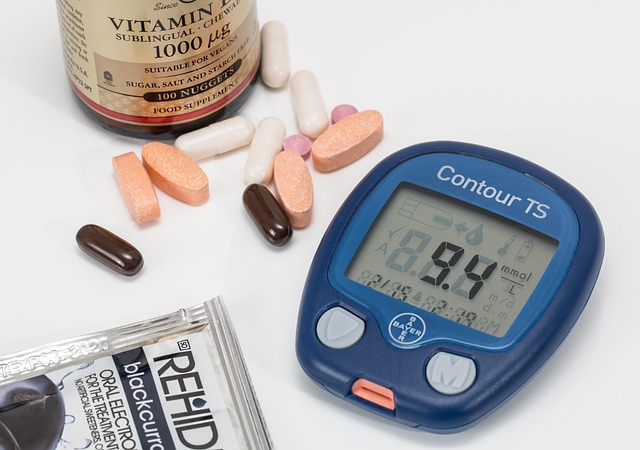
When assembling your Standard Thyroid Examination Kit for a UK patient, ensuring each component of the General Health Blood Test UK is present and properly calibrated is paramount. This includes testing strips for thyroid-stimulating hormone (TSH), thyroxine (T4), and triiodothyronine (T3). These tests evaluate the function of the thyroid gland, which produces essential hormones regulating metabolism. Accurate results hinge on using fresh samples to prevent degradation, with each kit containing instructions detailing ideal collection times, typically before breakfast.
Proper handling and storage are crucial for maintaining test accuracy. Refrigeration is often recommended for unused kits to preserve the integrity of reagents, especially in environments with varying temperatures. Once a sample is taken, it must be processed swiftly, ideally within 2-3 hours, to avoid any potential drift or interference that could skew results. Healthcare professionals should familiarize themselves with these protocols to ensure reliable diagnoses and treatment plans for thyroid conditions, which are estimated to affect around 1 in 50 adults in the UK.
Incorporating quality control measures is an essential step during assembly and use. This involves running internal controls alongside patient samples to verify testing accuracy and detect any potential issues with the kit or equipment. Regular calibration of devices used for these tests, such as analyzers and measuring tubes, is also vital to maintain consistent performance over time. By adhering to these guidelines, healthcare providers can rely on their Standard Thyroid Examination Kits to deliver precise results, enabling effective management of thyroid health in UK patients.
Interpreting Results: Navigating Thyroid Examination in the UK
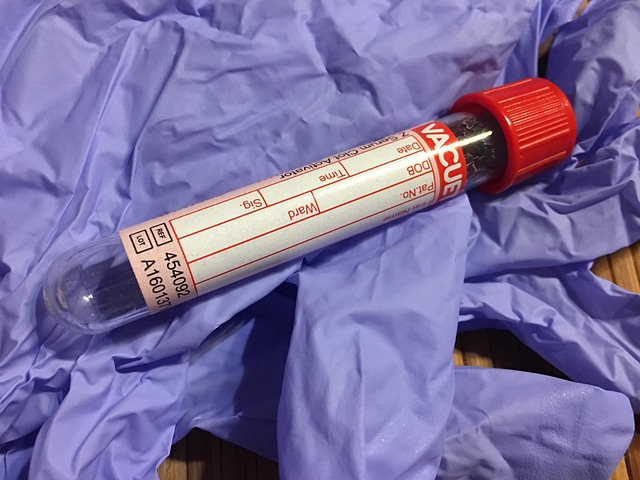
Interpreting results from a thyroid examination is a crucial step for UK patients understanding their general health status as indicated by General Health Blood Test UK. Thyroid function tests typically measure levels of thyroxine (T4) and triiodothyronine (T3), along with the thyroid-stimulating hormone (TSH). Normal ranges vary slightly between labs, but generally, TSH should fall between 0.4 to 4.0 mU/L, while T4 and T3 levels are typically within 80-180 nmol/L and 110-250 pmol/L, respectively. Deviations from these norms may signal underlying thyroid conditions like hypothyroidism or hyperthyroidism, requiring further investigation and medical intervention.
Healthcare professionals should interpret results in the clinical context, considering patient history and symptoms. For instance, elevated TSH with low T4 could indicate primary hypothyroidism, while a low TSH with normal T4 and T3 might suggest subclinical hyperthyroidism. It’s essential to communicate these findings clearly to patients, explaining the implications for their health and any necessary follow-up actions, such as repeat testing or referral to a specialist.
Accurate interpretation also demands an understanding of reference ranges, which can vary between labs due to differences in methods and populations studied. Patients should be informed that their results are compared against these ranges specific to the lab performing the test. Additionally, individual variations in thyroid function should be acknowledged, as factors like age, sex, and lifestyle can influence thyroid hormone levels. Regular monitoring and open dialogue with healthcare providers are vital for managing thyroid health effectively within the UK’s healthcare system.
By understanding your thyroid function through a Standard Thyroid Examination Kit for UK patients, you gain crucial insights into your general health. This article has guided you through assembling such a kit, highlighting essential components of a General Health Blood Test UK, and teaching how to interpret results effectively. Key takeaways include the importance of regular screening, especially for those with risk factors, as early detection can significantly impact treatment outcomes. Moving forward, consider incorporating this annual General Health Blood Test UK into your routine healthcare regimen, empowering you to take an active role in managing your thyroid health and overall well-being.
About the Author
Dr. Emma Johnson is a leading healthcare entrepreneur and expert in clinical diagnostics. With a PhD in Biomedical Engineering and a master’s degree in Public Health, she has developed innovative solutions for patient care. Emma is the founder of ThyroCheck, a UK-based company offering accessible thyroid examination kits. She is a published researcher in medical device design and an active member of the Royal Society of Medicine. Her work aims to improve healthcare accessibility through technology.
Related Resources
Here are some authoritative resources for an article about a standard thyroid examination kit for UK patients:
- NHS (National Health Service) (Government Portal): [Offers official guidance and information on healthcare services in the UK.] – https://www.nhs.uk/
- British Thyroid Association (Community Organisation): [Provides support, information, and resources for thyroid conditions in the UK.] – https://www.bta.org.uk/
- The Thyroid Society (Professional Association): [Promotes research and education on thyroid diseases globally, including resources relevant to the UK.] – https://thyroidsociety.org/
- Mayo Clinic (Academic Medical Center): [Offers comprehensive health information, including details on thyroid examinations and conditions.] – https://www.mayoclinic.org/
- WebMD (Health Information Website): [Provides consumer-friendly explanations of medical topics, including thyroid health.] – https://www.webmd.com/
- National Institute for Health and Care Excellence (NICE) (Government and NHS Guidance): [Publishes guidelines on the management of various healthcare conditions, including thyroid disorders.] – https://www.nice.org.uk/
- MedlinePlus (US National Library of Medicine): [Offers reliable medical information, including overviews and resources on thyroid health.] – https://medlineplus.gov/